Author: Admin

  • Major Currency Pairs Explained (Majors, Minors & Exotics)

    Major Currency Pairs Explained (Majors, Minors & Exotics)

    With dozens of currency pairs to choose from, beginners often wonder which ones to actually trade. The answer starts with understanding the three groups — majors, minors and exotics — and why most successful traders focus on the majors. Here is everything you need to know.

    Quick recap: what is a currency pair?

    Forex is always traded in pairs, like EUR/USD. The first currency is the base, the second is the quote, and the price shows how much of the quote currency it takes to buy one unit of the base. New to this? See what is a pip.

    The major currency pairs

    The majors are the most traded pairs in the world, and they all include the US dollar. They have the highest liquidity and the tightest spreads:

    • EUR/USD — euro vs US dollar (the most traded pair)
    • GBP/USD — British pound vs US dollar
    • USD/JPY — US dollar vs Japanese yen
    • USD/CHF — US dollar vs Swiss franc
    • AUD/USD — Australian dollar vs US dollar
    • USD/CAD — US dollar vs Canadian dollar
    • NZD/USD — New Zealand dollar vs US dollar

    At SCapitalFX, EUR/USD spreads start from just 1.0 pip on Standard and 0.0 pips on Raw — see Standard vs Raw.

    Minor pairs (crosses)

    Minors, or crosses, are pairs that do not include the US dollar — for example EUR/GBP, EUR/JPY or GBP/JPY. They are still liquid but usually have slightly wider spreads than the majors.

    Exotic pairs

    Exotics pair a major currency with the currency of a smaller or emerging economy. They can move sharply and tend to have much wider spreads and lower liquidity, which makes them riskier for beginners.

    Which pairs should a beginner trade?

    Stick to the majors — especially EUR/USD. They are the most liquid, have the tightest spreads (lower cost), and are heavily covered in news and analysis, so they are easier to study. Focusing on one or two pairs also helps you learn how they behave.

    Major pairs and trading sessions

    Each pair is most active when its home markets are open. EUR/USD and GBP/USD move most during the London and New York sessions, while USD/JPY and AUD/USD are livelier in the Asian session — see best time to trade.

    Risk warning: Trading forex on margin carries a high level of risk and may not be suitable for everyone. You could lose some or all of your invested capital.

    Frequently asked questions

    What is the most traded currency pair?

    EUR/USD is by far the most traded pair, with the highest liquidity and among the tightest spreads.

    What is the difference between majors, minors and exotics?

    Majors include the US dollar and are the most liquid; minors (crosses) exclude the dollar; exotics pair a major with an emerging-market currency and have wider spreads.

    Which pairs are best for beginners?

    The majors — especially EUR/USD — because of their liquidity, tight spreads and abundance of analysis.

    How many pairs should I trade at once?

    Start with just one or two so you can learn their behaviour and avoid over-exposure to correlated moves.

    Start with the majors

    Open your account or a free demo and practise on EUR/USD with tight spreads. New to trading? Read our beginners guide.

  • What Are Swap Fees in Forex? (Overnight Fees Explained)

    What Are Swap Fees in Forex? (Overnight Fees Explained)

    If you hold a trade open overnight, you may notice a small charge or credit on it called a swap. It catches a lot of beginners by surprise. This guide explains what swap (overnight) fees are, why they exist, when they apply, and how to keep them from eating your profits.

    What is a swap fee?

    A swap is an interest adjustment for holding a leveraged position overnight. Because every forex trade involves borrowing one currency to buy another, there is an interest difference between the two — and that difference is applied to your position each night it stays open.

    Why do swaps exist?

    Each currency has its own interest rate set by its central bank. When you hold a pair, you are effectively earning the rate on the currency you bought and paying the rate on the one you sold. The net of those two is your swap:

    • Negative swap: you pay (most common).
    • Positive swap: you receive (when the bought currency has the higher rate).

    Swaps also apply to other markets you hold overnight, such as gold, indices, oil and crypto.

    When is swap charged?

    Swap is applied once per day at the daily rollover (around the end of the New York trading day). If you open and close a trade the same day, you usually pay no swap at all.

    Triple swap on Wednesday

    To account for the weekend (when markets are closed but interest still accrues), brokers typically charge three days of swap on Wednesday. So a position held over Wednesday night carries a larger swap than usual.

    How to check swap rates

    Swap rates vary by instrument and change with interest rates, so always check the current rate in the instrument’s details / contract specifications inside the SCapitalFX app before holding a position overnight.

    How to reduce the impact of swaps

    • Trade intraday — close before the daily rollover and you avoid swap entirely.
    • Be aware of triple-swap Wednesday when planning multi-day holds.
    • Factor swap into longer-term trades — for trades held days or weeks, include it in your cost.

    Risk warning: Trading forex and CFDs on margin carries a high level of risk. Swap fees add to your costs on positions held overnight. You could lose some or all of your invested capital.

    Frequently asked questions

    Do I always pay swap?

    Only on positions held past the daily rollover. Trades opened and closed the same day usually have no swap.

    Why was I charged three times the swap?

    That is the standard triple-swap on Wednesday, which covers the upcoming weekend.

    Can swap ever pay me?

    Yes — if the currency you bought has a higher interest rate than the one you sold, the swap can be positive (a credit).

    Where do I see the swap rate?

    In each instrument’s details / contract specifications inside the app, since rates differ per market and change over time.

    Trade with the full picture

    Understanding every cost makes you a sharper trader. Compare account pricing in Standard vs Raw and learn about the spread too. Ready? Open your account or a free demo.

  • Demo vs Live Trading Account: Which Should You Use?

    Demo vs Live Trading Account: Which Should You Use?

    Should you trade on a demo account or jump straight to real money? It is one of the first questions every new trader asks. The short answer: start on demo to learn, then move to a small live account to learn what demo cannot teach you. Here is how to get the most from each.

    What is a demo account?

    A demo account lets you trade with virtual money on real, live prices. Everything works like a real account — charts, orders, spreads — except the money is not real. It is the safest place to learn.

    What is a live account?

    A live account uses your real money. Profits and losses are real, which means your emotions are real too. At SCapitalFX you can open a live account from just $10.

    The benefits of a demo account

    • Zero risk while you learn how the platform works.
    • Test strategies and timeframes without losing money.
    • Practise the mechanics — placing, modifying and closing trades, setting stop-loss and take-profit.
    • Build confidence before any money is on the line.

    The limits of a demo account

    Demo has one big blind spot: emotion. Because the money is not real, you do not feel the fear and greed that change real decisions. That is why demo results often look better than early live results — see trading psychology.

    When should you switch to live?

    Move to a live account when you can tick these boxes:

    • You are consistently profitable on demo over many trades (not just lucky once).
    • You follow a written trading plan and understand risk management.
    • You can place trades and manage them without hesitation.

    Go live the smart way: start small

    When you switch, start with the smallest size possible (micro lots) on a small balance — you can begin from $10. This lets you feel real emotions while risking very little, so the transition is gentle. See how to start with $10.

    Demo and live at SCapitalFX

    SCapitalFX offers a free demo to practise, and live accounts from $10 (Standard) — so you can learn first, then go live at a level that feels comfortable.

    Risk warning: Live trading involves real risk and you could lose some or all of your invested capital. Demo performance does not guarantee live results.

    Frequently asked questions

    How long should I trade on demo?

    Until you are consistently profitable over a meaningful number of trades and comfortable with the platform — often a few weeks to a few months.

    Is demo trading realistic?

    The prices and mechanics are realistic; the missing piece is the emotion of risking real money.

    Can I use demo and live at the same time?

    Yes — many traders keep a demo to test new ideas while trading their proven approach live.

    How much should I deposit for my first live account?

    Start small — you can open from $10 — and only add more once you trade consistently.

    Start practising today

    Open a free demo or a $10 live account and put your plan to work. New here? Begin with our beginners guide.

  • Forex Trading Psychology: How to Master Your Emotions

    Forex Trading Psychology: How to Master Your Emotions

    Most traders spend all their time on strategy — yet the biggest reason they lose is not their system, it is their mind. Fear, greed and impatience quietly sabotage good plans. This guide covers forex trading psychology: the emotions that hurt you, the mistakes they cause, and how to build the discipline that separates winners from the rest.

    Why psychology is the hardest part of trading

    On a demo account, trading feels easy. Add real money and suddenly your hands shake, you close winners too early and let losers run. The strategy did not change — your emotions did. Mastering them is what makes a trader consistent.

    The four emotional enemies

    • Fear: closing winning trades too soon, or being too scared to enter a good setup.
    • Greed: oversizing, over-leveraging, or refusing to take profit.
    • Hope: holding a losing trade and “hoping” it comes back instead of cutting it.
    • Revenge: trying to win back a loss immediately with a bigger, reckless trade.

    Common psychological mistakes

    • Overtrading — taking trades out of boredom or to “make something happen.”
    • Moving your stop-loss further away to avoid taking a loss.
    • FOMO — chasing a move that already happened.
    • Revenge trading after a loss, usually with too much size.
    • Abandoning your plan after a couple of losing trades.

    How to build trading discipline

    • Trade a written plan. Rules remove in-the-moment emotion.
    • Accept losses as a cost of business. Every trader loses; small losses are normal and fine.
    • Focus on the process, not each outcome. A good trade can lose and a bad trade can win — judge yourself on following your rules.
    • Keep a journal. Note your emotions on each trade to spot your patterns.
    • Risk small. When risk is tiny (1–2%), fear and greed shrink too. See risk management.
    • Take breaks. Step away after a big win or loss before your next decision.

    Demo first, then small

    Practise your plan on a demo until it is automatic, then go live with the smallest size so the emotional jump is gentle. You can grow size as your discipline proves itself.

    Risk warning: Trading carries a high level of risk. Emotional discipline reduces mistakes but does not guarantee profit. You could lose some or all of your invested capital.

    Frequently asked questions

    Why do I trade well on demo but badly with real money?

    Real money triggers fear and greed that demo does not. Bridge the gap by going live with very small size at first.

    How do I stop revenge trading?

    Set a daily loss limit, and when you hit it, stop for the day. Walking away breaks the emotional spiral.

    How do I control fear and greed?

    Risk so little per trade that the outcome barely matters, and follow a written plan so decisions are made in advance.

    Is trading psychology really that important?

    Yes — most traders fail on discipline, not analysis. Managing your mind is as important as any strategy.

    Build good habits from day one

    Open a free demo and practise trading your plan calmly before going live. Pair it with solid risk management and our beginners guide.

  • How to Manage Risk in Forex Trading (7 Rules)

    How to Manage Risk in Forex Trading (7 Rules)

    Here is the truth most new traders learn too late: you do not need to win every trade to be profitable — you need to control your losses. More accounts are blown by poor risk management than by bad market analysis. This guide gives you seven practical rules to protect your capital and trade for the long run.

    Why risk management is everything

    Even a great strategy will lose sometimes. Risk management makes sure your losing trades stay small and your account survives long enough for the winners to add up. Protecting capital is rule number one — you cannot trade if your account is gone.

    The 7 core rules of risk management

    1. Risk only 1–2% per trade

    Never risk more than a small slice of your balance on a single trade. On a $1,000 account, 1% is just $10. That way a losing streak cannot wipe you out.

    2. Always use a stop-loss

    Decide your exit before you enter, and let the stop-loss order close the trade automatically if you are wrong. No exceptions.

    3. Aim for a positive risk-to-reward ratio

    Target at least 1:2 — risking 20 pips to make 40. With 1:2, you can be right less than half the time and still come out ahead.

    4. Size your positions correctly

    Work out your lot size from your risk and stop distance — not from how confident you feel. Start with micro lots (0.01).

    5. Do not over-leverage

    Access to 1:200 leverage does not mean you should max it out. High effective leverage is the fastest way to lose an account.

    6. Limit your total exposure

    Avoid stacking many correlated trades (for example, several USD pairs in the same direction) — they can all lose together. Cap how much of your account is at risk at once.

    7. Have a plan and keep a journal

    Write down your entry, stop, target and reason for every trade, then review them. A journal turns mistakes into lessons.

    The math that proves it matters

    Losses hurt more than equal gains: lose 50% of your account and you need a 100% gain just to break even. That is why keeping each loss small is so powerful — small losses are easy to recover from.

    Risk warning: Trading forex and CFDs on margin carries a high level of risk. Risk management reduces — but does not remove — the chance of loss. You could lose some or all of your invested capital.

    Frequently asked questions

    How much should I risk per trade?

    A common guideline is 1–2% of your account balance per trade, so no single loss does serious damage.

    What is the most important risk-management tool?

    The stop-loss. It caps your loss on every trade and takes emotion out of the exit.

    What risk-to-reward ratio should I use?

    Aim for at least 1:2. It lets your winners outweigh your losers even with a modest win rate.

    Can risk management make me profitable on its own?

    It will not create winning trades, but it keeps losses small enough that a decent strategy can succeed over time.

    Put these rules into practice

    Open a free demo and practise sizing and stop-losses with zero risk. New here? Start with our beginners guide.

  • Forex Order Types Explained (Market, Limit, Stop, SL & TP)

    Forex Order Types Explained (Market, Limit, Stop, SL & TP)

    Knowing the different order types is what separates a trader with a plan from one who just clicks buy and hopes. Orders let you enter at the right price, lock in profits and cap losses — automatically. This guide explains every forex order type in plain English, with when to use each.

    The two ways to enter a trade

    1. Market order

    A market order opens a trade immediately at the current price. Use it when you want in (or out) right now and a few pips do not matter. This is the most common order for beginners.

    2. Pending orders (enter later, at your price)

    A pending order tells the platform to open a trade only when price reaches a level you choose. There are four types:

    • Buy Limit: buy below the current price (you expect a dip, then a bounce up).
    • Sell Limit: sell above the current price (you expect a rise, then a drop).
    • Buy Stop: buy above the current price (you expect a breakout higher).
    • Sell Stop: sell below the current price (you expect a breakdown lower).

    Pending orders are great when you have a plan but cannot watch the screen all day.

    The two orders that protect every trade

    Stop-loss (SL)

    A stop-loss automatically closes your trade at a set price if the market moves against you — capping your loss. Every trade should have one. It is your single most important risk-management tool.

    Take-profit (TP)

    A take-profit automatically closes your trade once it reaches your profit target, so you lock in gains without having to watch constantly.

    Putting it together: a worked example

    Say EUR/USD is at 1.0800 and you expect a rise:

    • You place a market order to buy at 1.0800.
    • You set a stop-loss at 1.0780 (20 pips of risk).
    • You set a take-profit at 1.0840 (40 pips of reward).

    That is a 1:2 risk-to-reward trade that manages itself — whether it wins or loses, your plan is already in place.

    Risk warning: Orders help manage risk but do not remove it. In fast markets, prices can gap past a stop-loss. Trading carries a high level of risk and you could lose your invested capital.

    Frequently asked questions

    What is the difference between a limit and a stop order?

    A limit order buys lower or sells higher than the current price (trading a reversal); a stop order buys higher or sells lower (trading a breakout).

    Should I always use a stop-loss?

    Yes. A stop-loss caps your downside and is the foundation of risk management on every trade.

    What is a good risk-to-reward ratio?

    Many traders aim for at least 1:2 — risking 20 pips to make 40 — so winners outweigh losers over time.

    Can I change my stop-loss and take-profit after opening a trade?

    Yes, you can adjust them while the trade is open — but avoid moving your stop further away just to avoid a loss.

    Trade with a plan

    Open a free demo and practise market and pending orders with stop-loss and take-profit. New here? Start with our beginners guide and learn to read charts.

  • How to Trade Oil (USOIL & Brent Crude)

    How to Trade Oil (USOIL & Brent Crude)

    Oil is one of the most actively traded commodities in the world. Its strong trends and sharp reactions to news make it a favourite for active traders. At SCapitalFX you can trade oil as a CFD — going long or short with leverage, no barrels required. Here is how oil trading works, with your real conditions.

    What is oil trading?

    Oil trading means speculating on the price of crude oil. The two global benchmarks are:

    • USOIL (WTI): West Texas Intermediate, the US benchmark.
    • UKOIL (Brent): the international benchmark priced in the North Sea.

    As CFDs, you trade the price movement — profiting whether oil rises (go long) or falls (go short) — without owning physical barrels.

    Oil and gas specs at SCapitalFX

    Symbol Market 1 lot Spread from (Raw) Max leverage
    USOIL WTI crude 1,000 barrels $0.03 1:50
    UKOIL Brent crude 1,000 barrels $0.03 1:50
    XNGUSD Natural gas 10,000 units $0.005 1:50

    A $6 round-turn commission applies on a Raw account (zero on Standard).

    How profit and loss work

    One standard lot of USOIL is 1,000 barrels, so every $1 move in the oil price equals $1,000 of profit or loss per lot. Oil can swing $1–$3 in a single day, so most beginners trade 0.01 lots (10 barrels), where a $1 move is just $10 — keeping risk small.

    What moves the price of oil?

    • Supply and demand — global growth lifts demand; recessions cut it.
    • OPEC+ decisions — production cuts or increases move prices fast.
    • US inventory data — the weekly EIA crude stocks report (usually Wednesday) often causes sharp moves.
    • Geopolitics — conflict in oil regions can spike prices.
    • The US dollar — oil is priced in dollars, so a stronger dollar can weigh on it.

    How to start trading oil step by step

    1. Open an account. Sign up at SCapitalFX and verify.
    2. Fund it with USDT, BTC and 50+ coins.
    3. Open the USOIL chart and study the trend on a higher timeframe.
    4. Decide long or short, then set your stop-loss and take-profit.
    5. Start with 0.01 lots and manage the trade to your plan.

    Best times to trade oil

    Oil is most active during the US session, and especially around the weekly EIA inventory release and OPEC announcements. See our best time to trade guide.

    Risk warning: Oil is highly volatile and trading oil CFDs on margin carries a high level of risk. You could lose some or all of your invested capital. Always use a stop-loss.

    Frequently asked questions

    What is the difference between WTI and Brent?

    WTI (USOIL) is the US benchmark; Brent (UKOIL) is the international one. They usually move together but can trade at slightly different prices.

    Can I short oil?

    Yes. As a CFD you can go short to profit when oil falls, just as you go long when it rises.

    How much money do I need to trade oil?

    You can start small with 0.01-lot positions. Because each $1 move is $1,000 on a full lot, keep your size modest and always use a stop-loss.

    When does oil move the most?

    Around the US session, the weekly EIA inventory report, and OPEC+ decisions.

    Start trading oil

    Open your account or a free demo and trade WTI and Brent crude. Explore all markets and conditions here.

  • How to Read Forex Charts: A Beginner’s Guide to Candlesticks

    How to Read Forex Charts: A Beginner’s Guide to Candlesticks

    A price chart is a trader’s main tool — it shows you what the market is doing at a glance. The most popular type is the candlestick chart, and once you can read one, technical analysis starts to make sense. This beginner’s guide explains how to read forex charts, candlesticks, timeframes and the key patterns.

    The three main chart types

    • Line chart: connects closing prices — simple, good for spotting the overall direction.
    • Bar chart: shows open, high, low and close for each period.
    • Candlestick chart: the same data as a bar chart but far easier to read — and the trader favourite.

    How to read a candlestick

    Each candle shows four prices for its time period — the open, high, low and close:

    • The thick part is the body (from open to close).
    • The thin lines are the wicks (the high and low).
    • A bullish candle (often green) closes higher than it opened.
    • A bearish candle (often red) closes lower than it opened.

    Long bodies show strong momentum; long wicks show rejection of a price level.

    Timeframes

    Each candle represents a chosen period — 1 minute, 1 hour, 4 hours, daily, and so on. The SCapitalFX app offers multiple timeframes. A simple beginner approach:

    • Use a higher timeframe (daily or 4-hour) to see the overall trend.
    • Use a lower timeframe (1-hour or 15-minute) to time your entry.

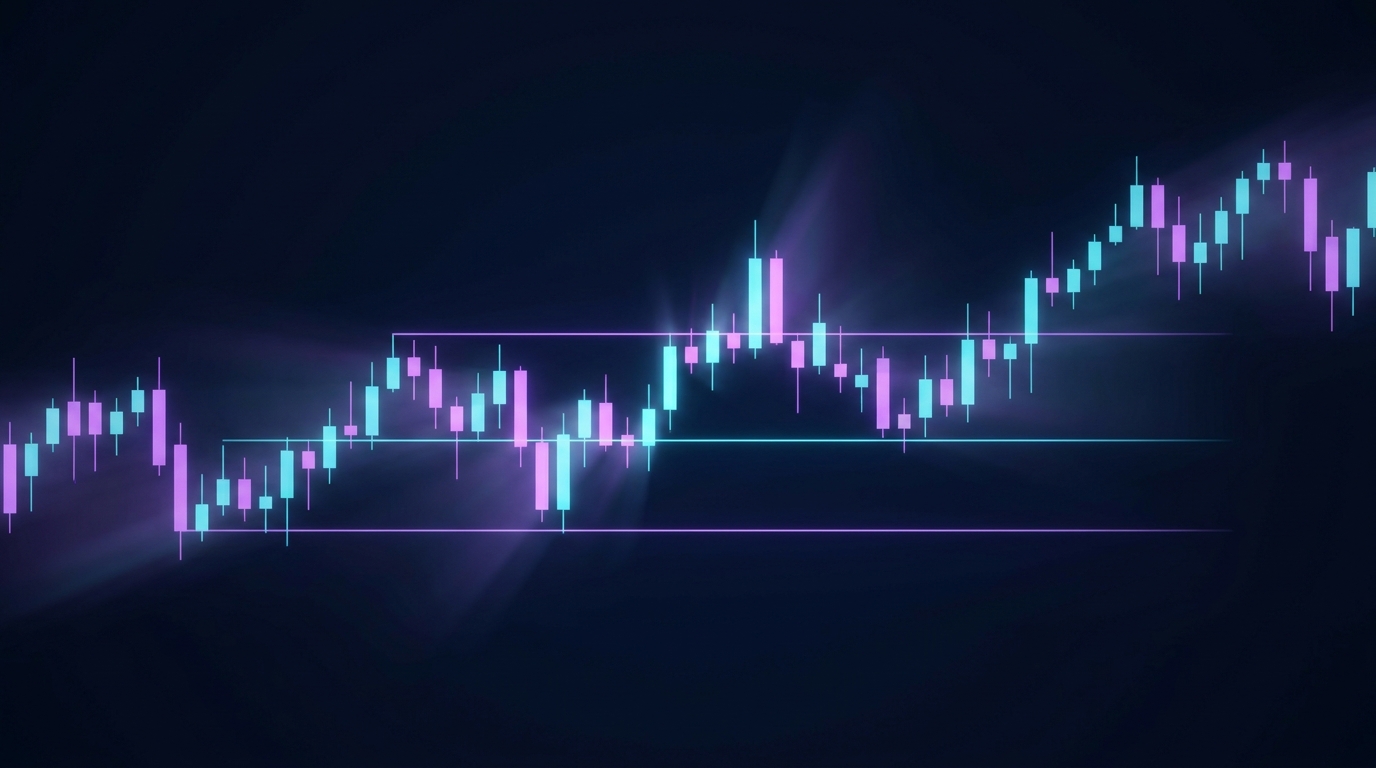
    Support and resistance

    These are the building blocks of chart reading:

    • Support: a price level where falling prices tend to bounce up.
    • Resistance: a level where rising prices tend to stall and fall.

    Traders watch for price to bounce off, or break through, these levels.

    Spotting the trend

    • Uptrend: higher highs and higher lows.
    • Downtrend: lower highs and lower lows.
    • Range: price moving sideways between support and resistance.

    A few candlestick patterns to know

    • Doji: open and close almost equal — indecision, possible reversal.
    • Hammer: small body with a long lower wick — potential bottom.
    • Engulfing: a big candle that fully covers the previous one — a strong momentum shift.

    Patterns are clues, not guarantees — always combine them with trend and support/resistance.

    Risk warning: No chart pattern predicts the market with certainty. Trading carries a high level of risk and you could lose your invested capital. Always use a stop-loss.

    Frequently asked questions

    What is the best chart type for beginners?

    Candlestick charts — they pack the most information into an easy-to-read format and are the industry standard.

    What timeframe should beginners use?

    Start on higher timeframes (4-hour or daily). They are less noisy and easier to read than 1-minute charts.

    What do the candle colours mean?

    Green (or white) usually means the price closed higher than it opened; red (or black) means it closed lower.

    Do I need indicators to read charts?

    No — price action, trend and support/resistance are enough to start. Indicators can be added later as a complement.

    Practise on live charts

    Open a free demo and study live candlesticks on the SCapitalFX app. New to trading? Read our beginners guide first.

  • What Is Margin in Forex? (Margin, Free Margin & Margin Level)

    What Is Margin in Forex? (Margin, Free Margin & Margin Level)

    Margin is one of the most important concepts in leveraged trading — and one that trips up many beginners. Understand it, and you will know exactly how much you can trade and how to avoid having positions closed on you. This guide breaks down margin, free margin, margin level, and the margin call.

    What is margin in forex?

    Margin is the amount of your own money set aside to open and hold a leveraged trade. It is not a fee — it is a good-faith deposit that is locked while the trade is open and released when you close it. Margin is the flip side of leverage: the higher your leverage, the less margin you need.

    How to calculate required margin

    Required margin = position size ÷ leverage.

    Example: to open 1 standard lot of EUR/USD (worth about $108,000) at 1:200 leverage, you need $108,000 ÷ 200 = $540 in margin.

    The four terms you need to know

    • Balance: your account cash, not counting open trades.
    • Equity: balance plus or minus the profit/loss of open trades.
    • Used margin: the total margin locked in your open positions.
    • Free margin: equity minus used margin — what you have left to open new trades or absorb losses.

    What is margin level?

    Margin level shows how healthy your account is:

    Margin level = (equity ÷ used margin) × 100%

    A high margin level is safe; a falling one means your losses are eating into your margin.

    Margin call and stop-out

    SCapitalFX uses two protective levels based on your margin level:

    • Margin call at 100%: a warning that your equity has dropped to your used margin. Add funds or reduce positions.
    • Stop-out at 50%: if your margin level keeps falling to 50%, positions are automatically closed (worst first) to stop further losses.

    How to avoid a margin call

    • Do not use all your free margin at once — keep a buffer.
    • Always trade with a stop-loss so losses can’t spiral.
    • Use sensible position sizes (risk 1–2% per trade).
    • Watch your margin level, especially around big news.

    Risk warning: Trading on margin carries a high level of risk and can lead to rapid losses. You could lose some or all of your invested capital. Never trade with money you cannot afford to lose.

    Frequently asked questions

    Is margin a fee or a cost?

    No. Margin is a deposit that is locked while your trade is open and returned to your free margin when you close it.

    What happens at a margin call?

    It is a warning that your account is at risk. If the margin level keeps falling to the stop-out level (50%), positions are closed automatically.

    How much margin do I need?

    Divide the position size by your leverage. A $20,000 position at 1:200 needs $100; the same position at 1:50 needs $400.

    What is the difference between margin and free margin?

    Used margin is locked in open trades; free margin is what is left over to open new trades or withstand losses.

    Trade with margin in mind

    Open a free demo to see margin and margin level update live as you trade. Learn the basics first in our beginners guide.

  • What Is a Lot in Forex? (Lot Sizes Explained)

    What Is a Lot in Forex? (Lot Sizes Explained)

    When you place a forex trade, you choose a lot size — and that single choice decides how much each price move is worth, and how much you can win or lose. Getting it right is the heart of risk management. This guide explains what a lot is, the different lot sizes, and how to pick the right one.

    What is a lot in forex?

    A lot is the standard unit of trade size in forex. It tells you how many units of the base currency you are trading. Instead of saying “100,000 euros,” traders just say “1 lot of EUR/USD.”

    Forex lot sizes explained

    Lot type Size you enter Units 1 pip value*
    Standard lot 1.0 100,000 $10
    Mini lot 0.1 10,000 $1
    Micro lot 0.01 1,000 $0.10

    *Approximate pip value for US-dollar-quoted pairs. See what is a pip.

    At SCapitalFX you can trade from 0.01 lots (a micro lot), which keeps each pip worth about 10 cents — ideal while you learn.

    Why lot size matters so much

    Your lot size directly controls your risk. The same 30-pip loss is:

    • $300 on a standard lot
    • $30 on a mini lot
    • $3 on a micro lot

    Same market move, very different outcomes — which is why beginners should start small.

    How to choose the right lot size

    Professionals size trades from their risk, not their hopes. The formula:

    Lot size = (risk in $) ÷ (stop-loss in pips × pip value per lot)

    Worked example

    Say you have $1,000 and risk 1% ($10) on a trade with a 50-pip stop-loss:

    • You need a pip value of $10 ÷ 50 = $0.20 per pip.
    • Since a micro lot is $0.10 per pip, that is about 0.02 lots.

    This way, even if the trade hits your stop, you only lose the $10 you planned to risk.

    Risk warning: Trading forex on margin carries a high level of risk. Position sizing controls your risk, but you can still lose your invested capital. Never risk money you cannot afford to lose.

    Frequently asked questions

    What is the smallest lot I can trade?

    At SCapitalFX you can trade from 0.01 lots (a micro lot), so you can keep positions and risk very small.

    How much is 1 lot worth?

    A standard lot is 100,000 units, where each pip is about $10 for US-dollar pairs. A mini lot is $1 per pip and a micro lot $0.10.

    What lot size should a beginner use?

    Start with micro lots (0.01) and size each trade so you risk only 1–2% of your balance.

    Does lot size change for gold or indices?

    Yes — each market has its own contract size. For example, 1 lot of gold is 100 ounces and 1 lot of an index is 1 contract. Check each instrument’s details before trading.

    Practise your sizing

    Open a free demo or live account and practise lot sizing with micro lots. New? Start with how to start with $10 and our beginners guide.

Chat with us
EN|ES|AR|FA